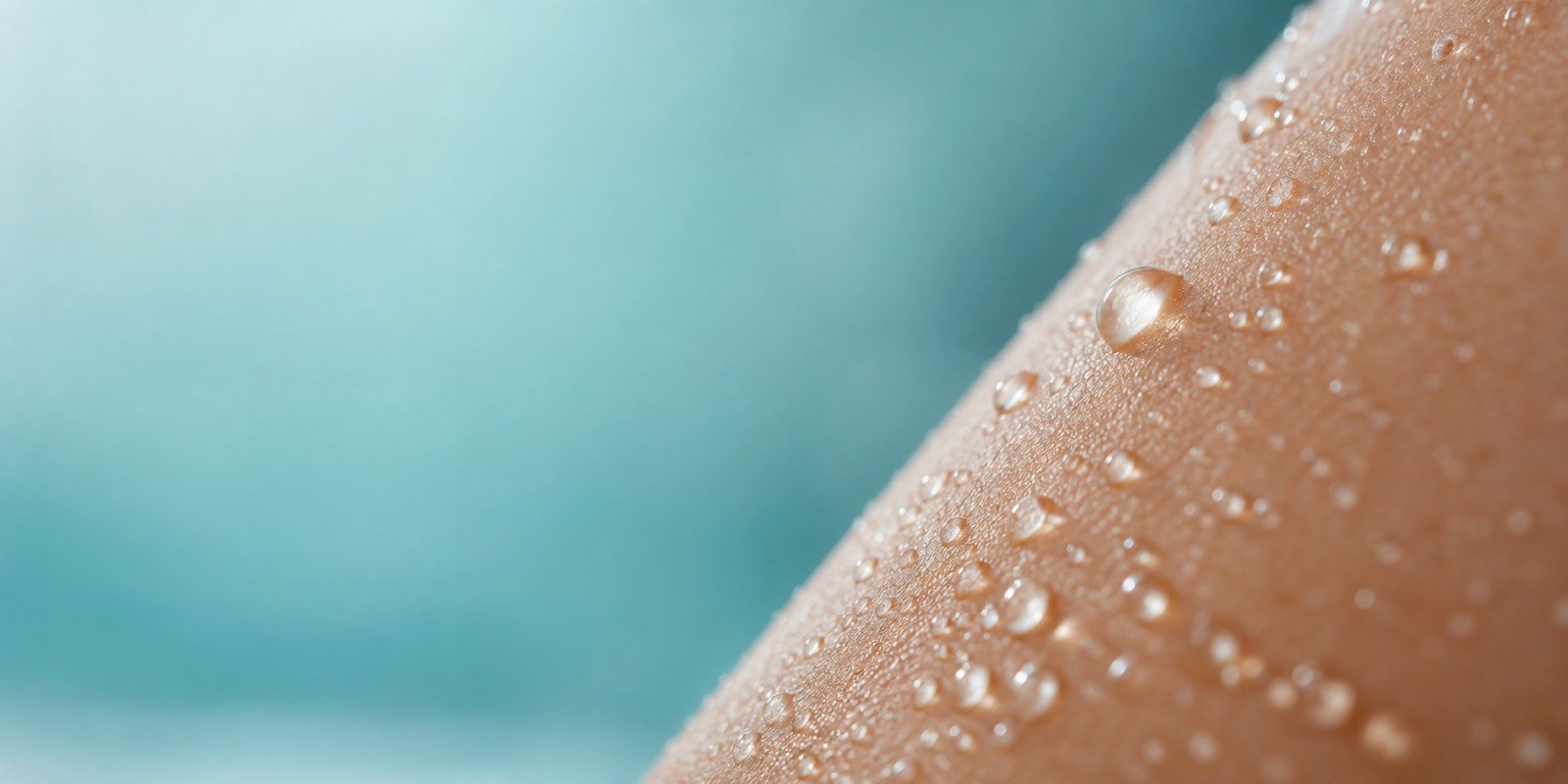
Fast, or oddly delayed
In roughly half of cases it begins within seconds to minutes of water contact. In the rest it starts 2 to 15 minutes after the water has stopped — which is part of why the connection gets missed.
Also called water-triggered itching
Intense itching, prickling or burning triggered by contact with water, on skin that shows no rash.
It affects up to one in five young adults in some surveyed populations, has a research literature going back decades, and carries one association genuinely worth checking with a doctor. If you have spent years being told it is dry skin or stress, this site is written for you.
Six questions, about two minutes. No account, and nothing is sent unless you choose to.
If you have ever tried to explain this and watched someone glance at your perfectly normal skin, you already know the hardest part of the condition.
Aquagenic pruritus is intense itching, prickling, stinging or burning triggered by contact with water — tap water, a shower, rain, the sea, a pool, sweat, sometimes just humid air. Water temperature and source often make no difference. The defining clinical feature is what is not there: no hives, no welts, no rash. Skin that looks completely ordinary while it feels like it is being stung.
That invisibility is why the condition gets brushed off as dry skin, stress or something psychological. It is none of those things, and there is a reasonable amount of published research on it — including a validated questionnaire and a well-documented link to a group of blood conditions that makes it worth taking seriously rather than tolerating.
Prevalence looks very different depending on who was surveyed, which itself suggests water composition, climate and washing habits all matter:
These are specific populations, not a global rate, and nobody knows the true worldwide figure — partly because the condition is so often misrecorded. But even the lowest of these numbers means millions of people. Onset usually falls in childhood, adolescence or early adulthood, and a family history of the same thing is common.
In roughly half of cases it begins within seconds to minutes of water contact. In the rest it starts 2 to 15 minutes after the water has stopped — which is part of why the connection gets missed.
Thighs, upper arms, forearms, shins, chest, back and abdomen, usually on both sides. Palms, soles, head, neck and mucous membranes are characteristically spared.
People reach for prickling, stinging, crawling, burning or 'like fibreglass under the skin' far more often than the word itch. Intensity can reach the top of the scale.
Any marks come from scratching, not from the condition. Over years that can leave excoriations and thickened skin, which then confuses the picture further.
Most itch that doctors see is driven by histamine, so antihistamines are the reasonable first move. In aquagenic pruritus the results are inconsistent: published case reports describe primary cases that stayed refractory through five years of H1 and H2 blockade, and one that failed high-dose fexofenadine and then omalizumab.1 Other reviews report histamine antagonists helping around half of the patients who were treated. The honest summary is that they are unreliable here, not that they never work.
That inconsistency is why a non-histaminergic pathway is taken seriously: sensory C-fibres and a receptor called MrgprD, with contributions from acetylcholine released around sweat glands and increased fibrinolytic activity in the skin.2 Blocking histamine leaves that pathway untouched. It also explains the strangest finding in the field — that β-alanine, which activates the same receptor, appears to help by desensitising it before water contact.3 What people try, and the evidence behind it.
Aquagenic itching is sometimes the first outward sign of a myeloproliferative neoplasm — a group of chronic bone-marrow conditions, most often polycythaemia vera. In a cohort of 102 people with molecularly confirmed polycythaemia vera, 41.2% had aquagenic pruritus, and in 52.4% of those the itching started before the diagnosis was made, on average around 2.3 years earlier.6
This is not a reason to panic, and it is emphatically not a reason to assume the worst — most people with aquagenic pruritus have no blood disorder. It is a reason to get a full blood count on record, which is one of the cheapest and most routine tests in medicine. What the association is and what to ask for.
Each figure on this page links to the study it came from, with the sample size shown so you can weigh it yourself. Where a claim rests on a single case report or a self-selected survey, it says so.